You do not need a zero-waste pantry or a closet full of expensive “eco” labels to shop sustainably. You need a few simple habits that change what you buy, how often you buy it, and how long it stays useful.
This guide is built for busy people who want to make better choices without spending more or spending hours researching. Start with the first three habits, and add the rest when you are ready.
Why bother? Small changes add up
Most of our environmental impact as consumers starts at the checkout. Everything we buy took materials, energy, and shipping to reach us, and most of it eventually becomes waste.
Clothing shows the scale well. The EPA estimates that Americans generated about 17 million tons of textiles in 2018, and 11.3 million tons of that went to landfills. Only about 14.7 percent was recycled . Those are ordinary things: shirts, towels, shoes, sheets.
One shopper cannot fix that, and you do not need to carry the whole problem. What you do control is demand. Every item you skip, buy used, or keep for a few more years means one less item made, shipped, and eventually thrown away. Multiply that habit across millions of everyday shoppers and the effect is real.
The good news is that the benefits are not only for the planet. People who shop this way often find they gain:
- Money back: fewer impulse buys and fewer replacements
- Space and time: less clutter to store, clean, and organize
- Confidence: purchases you feel good about, instead of guilt after the fact
You do not need a big lifestyle overhaul to start. The next section shows how small the starting point can be.
What does it mean to shop sustainably?
Shopping sustainably means choosing products in a way that reduces harm to the environment and people, across the whole life of the product: how it is made, how it is shipped, how long it lasts, and what happens when you are done with it.
In practice, that comes down to three questions:
- Do I actually need this?
- Will it last, or can I get it secondhand?
- What happens to it at the end of its life?
You will notice that none of those questions require buying a “green” product. Often the most sustainable choice is buying less, or buying used.
1. Start with what you already own
The most sustainable product is the one you already have. Before buying, check whether you can:
- Use up, repair, or repurpose what is already in your home
- Borrow it from a friend, neighbor, or local library of things
- Rent it if you will only need it once (tools, party supplies, formalwear)
This is also the cheapest step. It is a rare case where the sustainable choice and the budget choice are the same.
2. Pause before you buy
Impulse purchases are where a lot of unnecessary waste starts. A simple rule helps:
- For small items: wait 24 hours.
- For bigger items: wait a week.
If you still want it after the pause, it is more likely to be something you will use. Keep a running note on your phone of things you are tempted to buy, and check it after the waiting period.
3. Buy for durability, not just price
“Cheap” and “affordable” are not the same thing. A $12 item you replace three times costs more than a $30 item that lasts for years. This is the heart of how to shop sustainably without sacrificing quality.
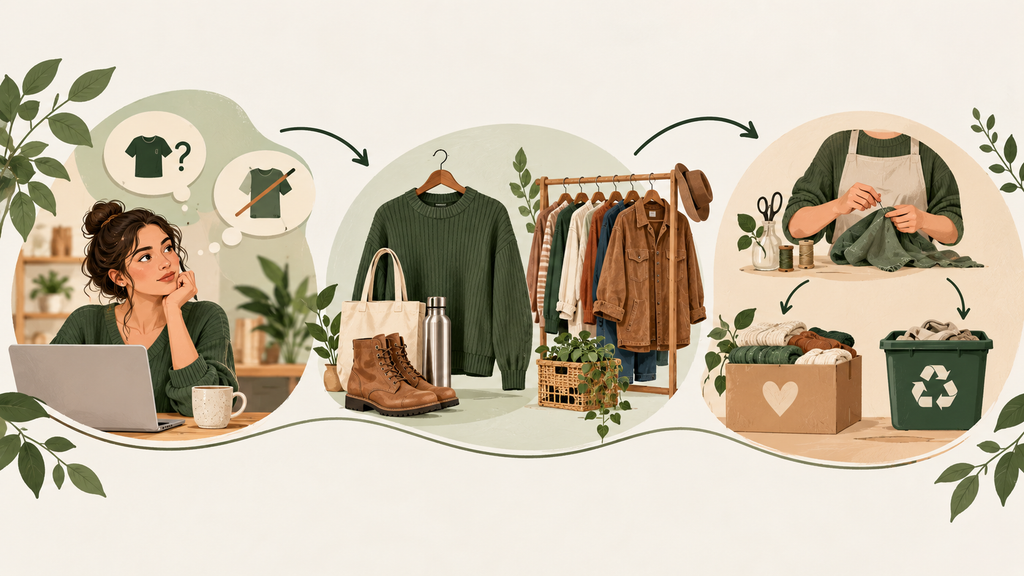
Before buying, quickly check:
- Materials: Solid wood, stainless steel, cast iron, glass, and natural fibers like cotton, linen, and wool tend to outlast thin plastics and fast-fashion fabrics.
- Construction: Look at seams, hinges, zippers, and joints. If they feel flimsy in the store or look flimsy in photos, they probably are.
- Repairability: Can you replace a part, a battery, or a cord? Can a shoe be resoled?
- Warranty: A long warranty is a signal the maker expects the product to last.
- Reviews after months of use: Search for “after 6 months” or “after 1 year” with the product name. Long-term reviews tell you more than first impressions.
A quick cost-per-use check: divide the price by how many times you realistically expect to use it. A $60 pair of boots worn 200 times costs 30 cents per wear. A $20 pair worn 10 times costs $2 per wear.
A real-life example: starting small
Bea Johnson is the author of Zero Waste Home and one of the best-known voices of the zero waste movement in the U.S. Her family’s story is a useful reminder that big lifestyle changes often begin with small, practical ones.
When her family began, the goal was not zero waste. In her words, At first, the goal was not going zero waste. It was decluttering and being more careful with water and electricity. After a year in a small apartment with only the necessities in 2006, she found they had not missed about 80 percent of what they had kept in storage, so they let it go.
Over time, those simple choices grew into a lifestyle. She has said her family cut its spending by about 40 percent along the way.
The takeaway for you: Her family goes much further than most people need to. You do not have to match it. What is worth borrowing is the order of operations: start by buying less and keeping what you own, and the savings and calm often follow. These are her own reported results, so treat them as one family’s experience, not a guarantee.
4. Check secondhand first
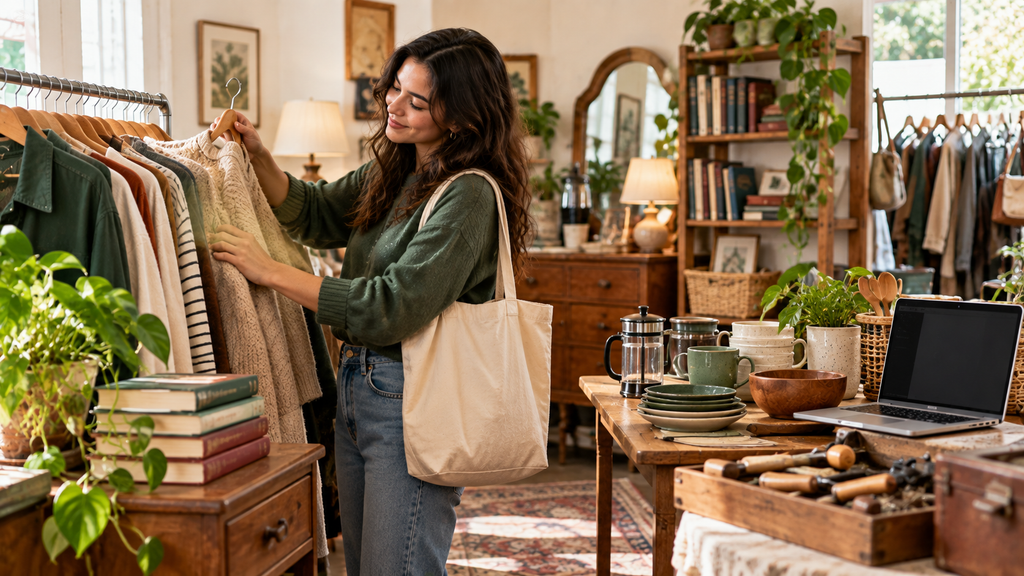
For many categories, buying used is the lowest-cost and lowest-impact option:
- Clothing: thrift stores, consignment shops, and resale apps
- Furniture: local marketplace listings, estate sales, and secondhand shops
- Books, kitchenware, and tools: thrift stores and community groups
- Electronics: certified refurbished options from the manufacturer or a reputable retailer, often with a warranty
Buying used keeps products in use longer and usually saves money. Be realistic about categories where new is better for safety or hygiene, such as car seats, helmets, and mattresses.
5. Learn which labels are worth trusting
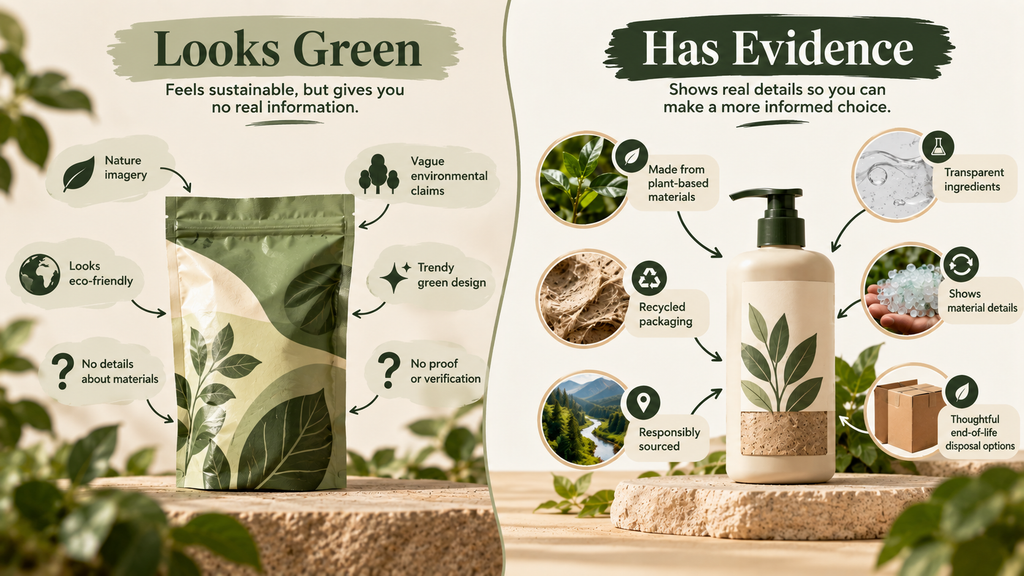
Words like “green,” “eco-friendly,” and “natural” are not regulated terms in most cases, which is how greenwashing happens. Third-party certifications are more reliable because an outside group verifies them. A few common ones in the U.S.:
| Label | Where you will see it | What it generally signals |
|---|---|---|
| ENERGY STAR | Appliances, electronics | Meets energy efficiency standards |
| USDA Organic | Food, some personal care | Organic farming and handling standards |
| Fair Trade Certified | Coffee, chocolate, clothing | Labor and sourcing standards |
| FSC (Forest Stewardship Council) | Paper, wood products | Responsibly managed forests |
| EPA Safer Choice | Cleaning products | Ingredients reviewed for safer chemistry |
| GOTS and OEKO-TEX | Textiles | Standards for organic fiber and chemical safety |
| Certified B Corporation | Companies overall | Meets social and environmental performance standards |
No label is perfect, and a label alone does not mean you need the product. Use them as one signal, not the whole decision.
Red flags for greenwashing:
- Vague claims with no detail (“eco-conscious,” “planet-friendly”)
- Green-colored packaging or leaf imagery doing the work instead of facts
- A single small sustainable feature used to market an otherwise ordinary product
- No information about materials, sourcing, or certifications
- Claims you cannot verify on the company’s website
6. Shop more consciously for the things you buy often
You will make the biggest difference with items you buy repeatedly, since small changes add up. Focus on habit swaps:
- Groceries: Plan meals, buy only what you will eat, and choose loose produce over pre-packaged where it makes sense.
- Household basics: Refillable or concentrated cleaning products and reusable items can reduce repeat purchases over time.
- Personal care: Use up what you have before switching, then replace with refillable or minimally packaged options when it fits your budget.
- Everyday carry: A reusable bag, bottle, and coffee cup you actually remember to bring does more than a drawer full of unused ones.
Do not throw out working products to replace them with “greener” versions. Using what you own until it is used up is the more sustainable path.
7. Think about packaging and shipping
Packaging is easy to overlook:
- Choose products with less or plastic-free packaging when the quality is comparable.
- Combine online orders into one shipment instead of many small ones.
- Choose slower shipping when you do not need it fast, which can mean fewer rush deliveries.
- Avoid ordering multiple sizes with the plan to return some. Check size guides and reviews first.
- Know your local recycling rules, since what is accepted varies by city.
8. Support companies that are transparent
You do not have to research every brand. A quick check helps:
- Do they share where and how products are made?
- Do they publish specific goals or progress, not only slogans?
- Do they offer repairs, take-back, or refill programs?
- Is their pricing realistic for what they claim?
Brands that give clear answers are usually a safer bet than those that stay vague.
A simple checklist to use before you buy
- Do I already own something that does this?
- Can I borrow, rent, or buy it used?
- Will I use it often enough to justify it?
- Is it well made, and can it be repaired?
- Are the sustainability claims specific and backed by a trusted certification or clear information?
- Is the packaging reasonable?
- Do I know what I will do with it when I am finished with it?
If you can answer yes to most of these, you are making a good choice, even if it is not a perfect one.
Balance sustainability, quality, and budget
Sustainable shopping should not be an all-or-nothing standard. If you cannot afford the premium option, buying secondhand, buying fewer things, and taking care of what you own all count. Pick the two or three habits that fit your life, such as pausing before you buy and checking secondhand first, and keep them going.
Frequently asked questions
How do I shop sustainably on a budget?
Start with the free and low-cost steps: use what you own, wait before buying, and check secondhand. Buying fewer, longer-lasting items usually costs less over time than frequent replacements.
How can I tell if a product is actually sustainable?
Look for specific information on materials and sourcing, third-party certifications relevant to the product type, and a company that explains its claims. Be cautious about vague wording with no detail behind it.
Is buying sustainable products always more expensive?
Not always. Upfront prices can be higher for some items, but durable products, secondhand purchases, and simply buying less can lower your overall spending.
What is the easiest first step if I am new to this?
Pause before purchases and check whether you can buy the item used or borrow it. These two habits need no special products or research.
Is shopping secondhand really more sustainable?
Generally yes, because it extends the life of an existing product instead of requiring a new one to be made. It works best for items that stay safe and functional with reuse.
Final thoughts
Learning how to shop sustainably is mostly about slowing down for a moment before you buy, choosing quality over quantity, and being skeptical of marketing that sounds greener than it is. You do not have to get everything right.
Every item you keep out of the landfill is one less thing made, shipped, and thrown away, and it is usually money left in your pocket too. Pick one habit from this guide and try it on your next purchase. That is how it starts, and each better choice adds up.